میلاد مولود کعبه و روز پدر مبارک باد

+ نوشته شده در یکشنبه چهاردهم خرداد ۱۳۹۱ ساعت 17:22 توسط گروه زبان انگليسي
|


Happy New school Year
We hope that you will be active and
successful in your great job of teaching
We are looking forward to receiving your
constructive suggestions
Best Wishes
English Group
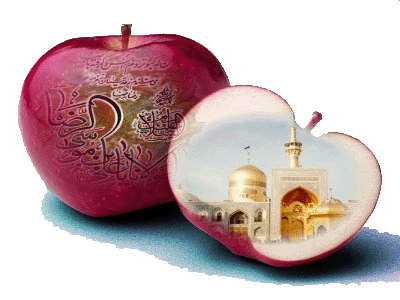
Emam Reza (A.S.), the eighth Shi'ite Emam was born on Thursday 11th Zee al-Qa'adah 148 A.H. /29 December 765 A.D. in Medina. The new-born child was named Ali by his holy father, Emam Musa al-Kazim (A.S.), the seventh Shi'ite Emam. He was divinely entitled al-Reza and his nickname was Abul Hasan. For many times Emam Musa Al-Kazem (A.S) explicitly introduced his eldest son "Ali" as his immediate successor to accede to the divine position of Emamat. Subsequent to the martyrdom of his father in Baghdad, on the 25th of Rajab 183 A.H. / 1 September, 799 A. D. in the prison of Abbasid caliph, Harunal_rashid, he attained the holy position of Emamat, when he was thirty five years old, and he held that divine position for twenty years. Three Abbasid caliphs were his contemporaries: for the first ten years Harun al- Rashid, for next five years Amin and finally for the last five years Ma'mun


How is Eid al-Fitr Celebrated
During the month of Ramadan, Muslims observe a strict fast and participate in pious activities such as charitable giving and peace-making. It is a time of intense spiritual renewal for those who observe it. At the end of Ramadan, Muslims throughout the world observe a joyous three-day celebration called Eid al-Fitr (the Festival of Fast-Breaking).
Eid al-Fitr falls on the first day of Shawwal, the month which follows Ramadan in the Islamic calendar. It is a time to give in charity to those in need, and celebrate with family and friends the completion of a month of blessings and joy.
Before the day of Eid, during the last few days of Ramadan, each Muslim family gives a determined amount as a donation to the poor. This donation is of actual food -- rice, barley, dates, rice, etc. -- to ensure that the needy can have a holiday meal and participate in the celebration. This donation is known as sadaqah al-fitr (charity of fast-breaking).
On the day of Eid, Muslims gather early in the morning in outdoor locations or mosques to perform the Eid prayer. This consists of a sermon followed by a short congregational prayer.
After the Eid prayer, Muslims usually scatter to visit various family and friends, give gifts (especially to children), and make phone calls to distant relatives to give well-wishes for the holiday. These activities traditionally continue for three days. In most Muslim countries, the entire 3-day period is an official government/school holiday.
A good teacher is a master strategist, an innovator, a resource base,a catalyst for change and a mind builder

You are the window through which many young people will see their future

Every class you teach is a sentence in the paragraph of the week, which is part of the chapter of that month, which is, in the end, part of the book that year becomes
HAPPY NEW YEAR
In harmony with the rebirth of nature, the Persian New Year celebration, NoRouz, always begins on the first day of spring. This celebration and its rituals go back to at least four thousand years ago. NoRouz means the "New Day", and refers to a new beginning, a new year. The year changes at the Vernal Equinox which occurs at a different time and day each year, on March 19, 20, 21 or 22. Its arrival is the precise moment the sun crosses the Equator. Amou (Uncle) NoRooz (similar to Santa Claus) kicks out winter cold and brings new life and warmth to every household.
The last Tuesday night of the year is spent jumping over bonfires in the hope that any bad spirits that may try to follow you into the new year will fall into the fire, freeing you from their evil! This is similar to halloween. The 13th day after the new year is also celebrated, with a day-long picnic, to ward off the unlucky number 13 by spending the day out of doors. The months in the Persian calendar correspond to those seen in common astrology charts or the horoscope.
Make sure you are smiling and wearing something new at that moment because that is how you will be for the rest of the new year! To this day, a few weeks before the new year, Persians thoroughly clean and rearrange their homes. They wear new clothes, bake pastries and germinate grainseed as signs of renewal. The ceremonial place setting known as Haft-Seen is set up in each household.
 Haft-Seen or The Table of Seven S's is a ritual table setting or decoration that Persians prepare and sit around. "Haft" is the number seven in Persian, and "Seen" is the letter S in the Persian alphabet. The decoration is made up of seven things whose names start with the letter "Seen" and must be present on any Haft-Seen table. The following is a list of "Haft-Seen" items and a brief description of their symbolic meaning or cultural significance
Sabzeh (sprouts, usually lentil or wheat): Representing fertility and the rebirth of nature. In ancient times, a sample of the grain to be planted in the spring was used as a test of how high the harvest would be that year.
Seeb (apple): Represents natural beauty.
Samanu (a pudding in which common wheat is transformed and given new life as a sweet, creamy pudding): Represents the reward of patience.
Somaq (sumac berry used as spice): Represents the color of sunrise; with the appearance of the sun Good conquers Evil.
Senjed (a sweet, dry fruit of the Lotus tree): Represents love and romance. It has been said that when a lotus tree is in full bloom, its fragrance and its fruit make people fall in love and become oblivious to all else!
Seer (garlic): Represents health.
Serkeh (vinegar): Represents age. In pre-islamic Iran, this item used to be wine.
Other items that you may see on Haft-Seen table
A mirror, which represents the images and reflections of Creation that by Persian beliefs took place on the first day of Spring. On either side of the mirror are two candlesticks holding a flickering candle for each child in the family. The candles represent enlightenment and happiness
Sonbol (Hyacinth): Spring flowers with the scent of heaven.
Sekkeh (coins): Represent prosperity and wealth.
A basket of painted eggs represents fertility.
A Seville orange floating in a bowl of water represents the earth floating in space.
A goldfish in a bowl represents life.
A flask of rose water known for its magical power is also included on the tablecloth
At NoRouz, children get fresh currency bills or coins from elderly relatives as gifts, but what it is most widely exchanged are lots of HUGs and KISSes for new friendships and renewing old one
 بنام خداوند جان و خرد کزو برتر اندیشه بر نگذرد
